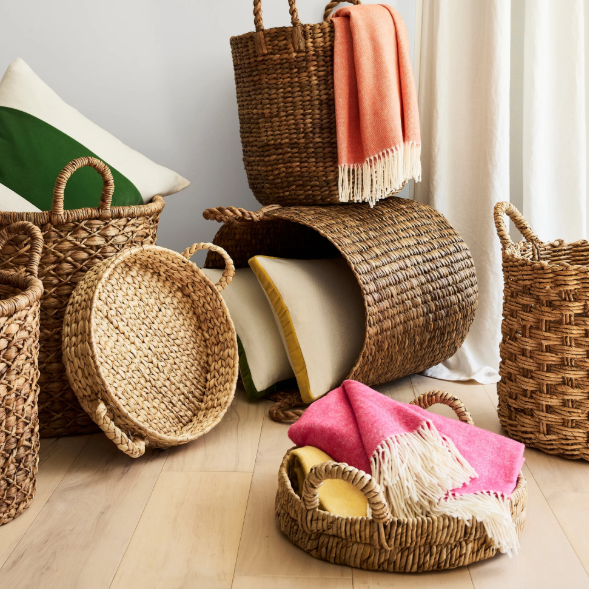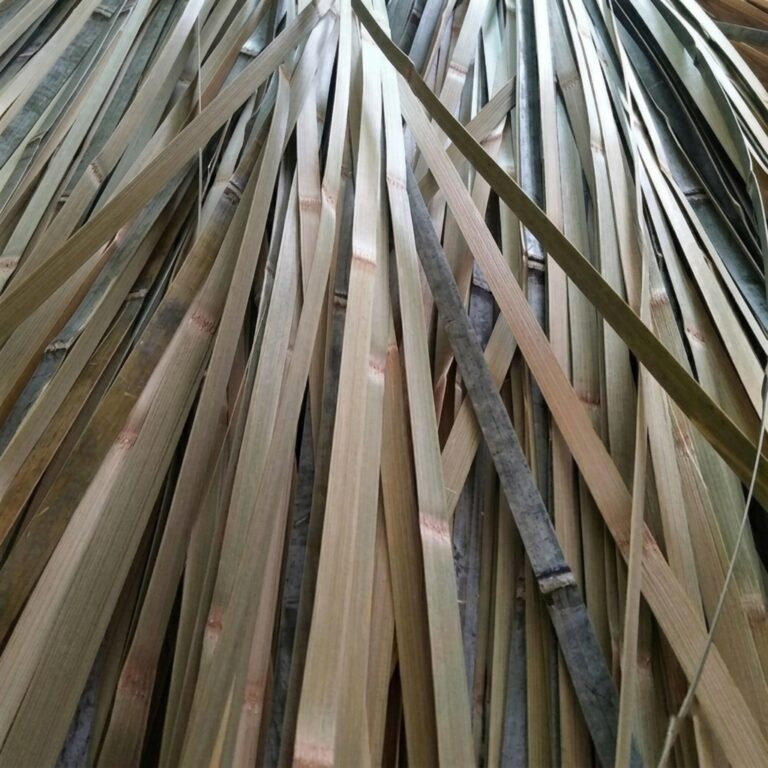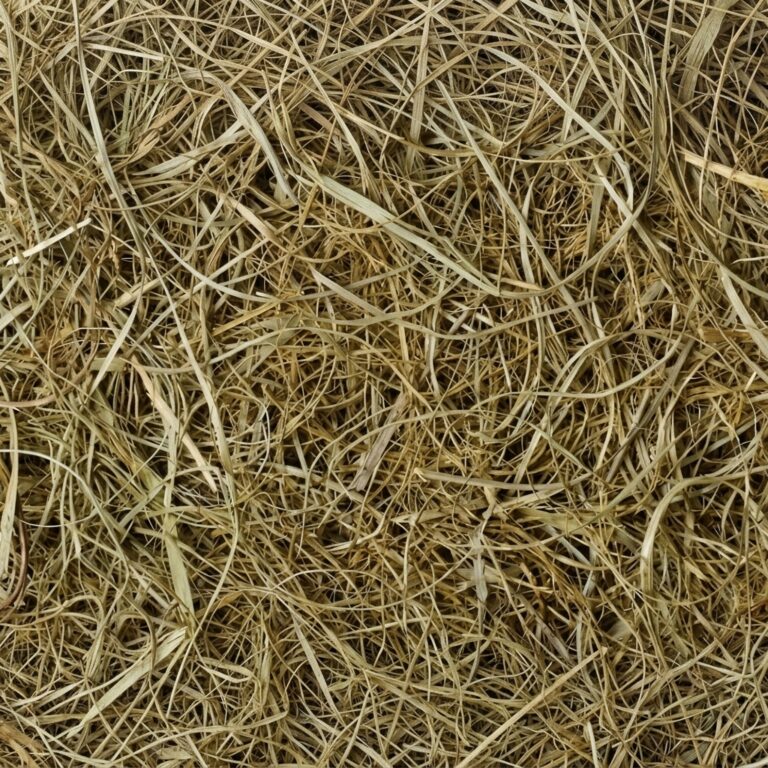
On the evening of July 8th, as the warm glow of the setting sun gently swept across Bobai County, the air was filled with the natural fragrance of bamboo and rattan.
Along the village paths, skilled artisans carefully split bamboo into fine strands with precision and patience. Inside traditional workshops, experienced craftsmen moved their hands gracefully as rattan strips flowed through their fingers, creating a rhythm of soft rustling sounds. Like lanterns taking shape under the moonlight, each piece slowly revealed its elegant form.
On the drying grounds, finished flower pots, baskets, and woven creations rested quietly beneath the golden sunset, showcasing their delicate textures and the warmth of natural materials.
In this renowned “Capital of Chinese Woven Crafts,” every handcrafted piece carries the traces of time, reflecting the dedication of generations of artisans and the unique beauty of traditional weaving craftsmanship.
Step into a woven craft workshop in Bobai, China, and you will discover the passion and precision behind every handmade creation.
Master Liu, a renowned artisan with over 40 years of craftsmanship experience, works quietly and attentively. With nothing more than thin metal wires, his skilled hands transform simple materials into detailed structures — from elegant rooftops and arched windows to the walls of a miniature castle.
“For me, any idea can become a real woven piece. Whether it is a traditional pavilion, a building, a flower, or an animal, even a few words of description can inspire a complete creation,” says Master Liu.
This is the spirit of craftsmanship: the ability to turn imagination into reality through patience, skill, and dedication.
“Where is the blueprint?”
When asked about his craftsmanship, Master Liu smiles and points to his forehead: “It’s all here.”
Behind every selection of material, every connection point, and every structural detail lies years of experience and careful consideration. The proportions, stability, and balance of each design are already visualized and refined in his mind through countless rounds of thought before a single piece is created.
The framework takes shape, and the craftsmanship begins.
Inside our weaving workshops, a wide variety of natural materials are carefully selected and transformed by skilled artisans. Beyond traditional materials such as bamboo and palm fiber, we have expanded our material range to include wood, grass, corn husk, banana leaves, and more than 20 other natural resources. Combined with hundreds of varieties of imported rattan and eco-friendly synthetic rattan alternatives, our material selection offers greater flexibility in design, functionality, and application.
Today, our woven products are available in a richer spectrum of colors and textures, allowing us to create designs that blend traditional craftsmanship with modern lifestyles.
Plain weaving may be the most fundamental technique, yet it requires the greatest level of skill and experience.”
Master weaver Mr. Zhu carefully takes the miniature castle frame and begins wrapping natural rattan strips around the metal structure. Each movement flows with precision — weaving over and under, threading through, tightening and adjusting with effortless control.
This refined technique comes from decades of hands-on experience and has become a natural part of his craftsmanship. Every movement is carefully balanced: the pressure applied determines the tightness and density of the weave, while shaping the overall rhythm and character of the piece.
From the first weave to the final finishing touch, every detail is completed with care, leaving no visible marks and creating a seamless expression of traditional craftsmanship.
In the craftsmanship exhibition hall, a remarkable bamboo and rattan woven replica of a traditional Hakka circular residence quietly stands as a testament to Chinese craftsmanship. Measuring over 2 meters in diameter and 0.88 meters in height, this intricate creation faithfully recreates the architectural beauty of a Hakka tulou-style dwelling.
From its curved black-tiled roof and elegant eaves to its winding corridors, textured walls, and delicate window patterns, every detail has been carefully reproduced with extraordinary precision.
“Every step of its creation was a challenge,” recalls Ms. Zhang, the founder of the company, as she reflects on the journey behind this masterpiece.
With no existing blueprints to follow, the welding team had to develop the structural framework from scratch. They repeatedly sketched, tested, and refined the design on the ground, spending more than a month overcoming technical challenges before completing the supporting structure.
Six master artisans then began the intricate weaving process. Working around the large yet tightly spaced framework — sometimes sitting, kneeling, or lying down to reach every detail — they applied traditional weaving techniques of crossing, pressing, wrapping, and threading. It took 16 days of dedicated craftsmanship to transform the bare framework into a fully woven structure with depth, texture, and character.
After multiple rounds of polishing and artistic finishing, this extraordinary piece was finally completed — a true representation of craftsmanship, patience, and cultural heritage.
Today, a twin piece of this creation has become part of the collection of the Luoyang Museum, preserving this remarkable example of traditional Chinese weaving artistry for future generations.
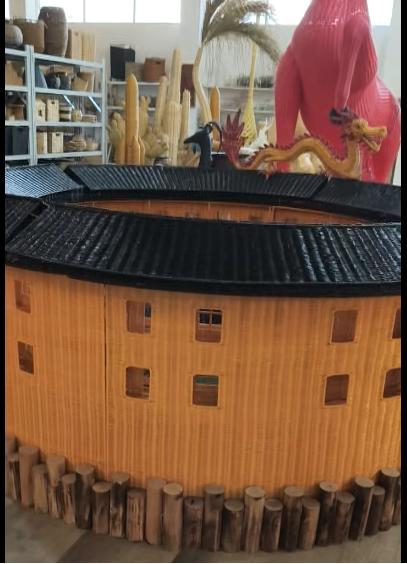
rattan woven replica of a traditional Hakka circular residence
Twenty years ago, Ms. Zhang began learning traditional bamboo and rattan weaving techniques in Bobai, Guangxi, China. Starting as a skilled artisan and later becoming the founder of her own company, she has always pursued excellence in craftsmanship with unwavering dedication.
To continuously improve her skills, she has traveled to different regions around the world to study diverse weaving methods, bringing new inspiration and knowledge back to her team for further exploration and innovation.
“Techniques such as herringbone weaving, eight-strand weaving, and diamond patterns each require years of practice. Many of our creations combine more than 30 different weaving techniques, and choosing the right combination of natural materials and weaving methods is a true art,” she explains.
This dedication to craftsmanship and attention to detail has become the foundation of our unique product quality and competitive advantage, allowing each piece to carry not only practical value but also the beauty and heritage of traditional handmade artistry.
In the hardware processing area, skilled workers are carefully attaching leather fasteners to perfume boxes for export to Japan.
“Every detail is strictly controlled — from the number of stitches and spacing of each seam to the durability testing of metal components. The hardware fittings must pass a 20-hour saltwater corrosion test and remain free from rust or damage within 48 hours,” explains Ms. Zhang.
This commitment to rigorous quality standards has helped the products gain increasing recognition in international markets. With growing global demand, the manufacturing network has expanded to Vietnam, enabling the company to better serve customers worldwide.
This year, Huatai Wang had the honor of receiving a custom order from the internationally renowned luxury brand DIOR, creating desert-inspired rattan handicrafts for its boutique stores in China.
To fulfill this special project, we carefully selected skilled artisans from local rural communities and built a dedicated creative team of 100 craftsmen. From initial design concepts to final production, the team spent months refining every detail, balancing traditional weaving techniques with modern aesthetics.
The final creations were recognized by the brand for their distinctive Eastern character, exceptional craftsmanship, and unique natural textures — showcasing the beauty of Chinese handmade artistry on an international stage.
We once tried to align our creations with Western tastes, but eventually realized that authenticity is what truly resonates. The unique charm of Chinese craftsmanship is not something to be replaced — it is something to be valued.”
Ms. Zhang shares that incorporating Eastern aesthetics and traditional craftsmanship into their designs has brought a deeper global appreciation. Today, more and more international brands are embracing these distinctive creations, attracted by the timeless beauty and cultural heritage behind every piece.
Great craftsmanship is rarely built by one person alone. Around the world, traditional skills survive and evolve when they are passed down through generations and supported by dedicated communities.
Bobai’s hand-weaving tradition is a perfect example. In , Heping Community, Yashan Town, a village of only about 20 households has developed into a vibrant weaving community with 18 local weaving enterprises.
This unique village-based manufacturing ecosystem combines generations of craftsmanship with modern production capabilities, creating a reliable supply network that processes thousands of orders every day and delivers handcrafted woven products to markets across China and worldwide.
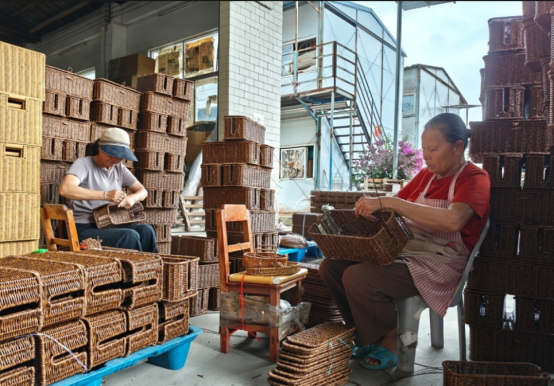
Artisans from Liaopo Village crafting woven products by hand in their workshops.
The threads of our craftsmanship connect generations of people and their stories. They tell the journeys of individuals like Master Liu, who started as an apprentice and became a respected craftsman; Master Zhu, who remains committed to preserving traditional weaving techniques; Ms. Zhang, who pursues new opportunities with passion and determination; and many young talents who have discovered growth, purpose, and a sense of belonging within this vibrant industry.
More than a craft, woven artistry from Bobai represents a living heritage — a quiet transmission of culture, skill, and creativity through generations.
Each handmade piece reflects a harmonious blend of traditional craftsmanship and contemporary lifestyle. Every carefully woven strand of bamboo and rattan carries the dedication, patience, and wisdom of skilled artisans.
Through innovation, this timeless tradition continues to evolve while preserving its original spirit. From a single natural fiber to a community with generations of craftsmanship, Bobai’s weaving culture reaches beyond borders, bringing warmth, sustainability, and authentic handmade beauty into homes around the world.